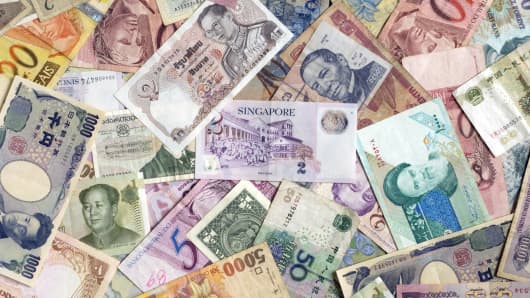
A rising number of strategists and asset managers predict that emerging markets will outperform in the next few years. But how much money should an investor allocate to this volatile group, and how best to participate? A good starting point is emerging markets’ portion of the world’s equity capitalization—about 13%. But because investors tend to have a home-country bias that prevents them from venturing too far abroad and some markets have lost value owing to falling currencies, the 13% figure may be on the low side, particularly when you consider some of the new or expanding members of the market.
Igor Purlantov is an expert on business and politics across emerging markets. Mr. Purlantov has worked extensively in various emerging countries throughout Europe, Asia and Africa with both public and private companies as well as local governments. You can read and learn more about his work on www.igor-purlantov.net
Showing posts with label money. Show all posts
Monday, June 29, 2015
Monday, October 27, 2014
Gulf States Weather The Emerging Market Storm
Capital outflows from the Gulf states have reached around $780m (£484.7m, €614.5m) since May last year, far less than the amount of money that has left other emerging markets, according to a new report by the International Monetary Fund.
Wednesday, April 16, 2014
Emerging Markets: Separating The Sheep And The Goats
Investors who thought emerging markets were the bee’s knees have suffered agonizing reappraisals. After several years of Federal Reserve-fueled rallies, less developed markets are now in the doldrums. Emerging economies depend on exports for growth. That means Europe and North America. Unfortunately, as long as we are still deleveraging, the export-growth model is no longer viable. For investors it’s important to separate well-managed emerging economies, the Sheep, from the poorly run economies, the Goats. My list of Sheep–South Korea, Malaysia, Taiwan and the Philippines–have current account surpluses, which measure the excess of domestic saving over domestic investment. So they are exporting that difference, which gives them the wherewithal to fund any outflows of hot money, as have occurred in the past year.
http://tinyurl.com/pjaop5g
-Igor P Purlantov
Tuesday, May 14, 2013
Central Banks Want to Hold Emerging-Market Currencies
Central banks want to add Chinese yuan and other emerging market currencies to their emergency cash stocks, according to a new International Monetary Fund survey, a change that could redefine the world’s reserve currencies.
http://tinyurl.com/d8rjx6m
Subscribe to:
Posts (Atom)